
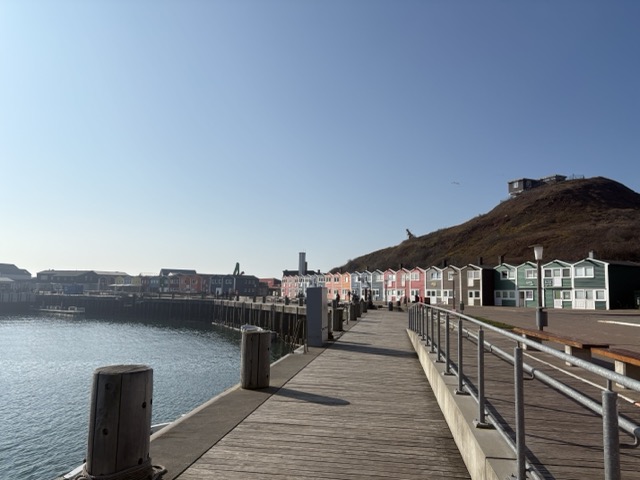
From 21.03.2026 – 29.03.2026, we had the pleasure of visiting Helgoland. Accessible only by boat (or by private plane) this small island archipelago, comprised of two islands in the North Sea, is known for it’s diverse amount of bird species and unusual geology. Despite it’s small size, the islands offer towering cliffs, sandy beaches, colourful houses along the shoreline and sand dunes. Whilst we were here, I could not resist trying a POTA activation, so I packed up my JPC-12 antenna and the Yaesu FT-891.
Helgoland has a fascinating history, first being Danish, then English, and now German. During the second World war, and afterwards in 1947 (known as the Big Bang), England dropped a huge barrage of bombs on the island. The craters leftover from this bombing are still visible today. During my first two POTA activation attempts on the island, I decided to try and use these old bomb craters to shelter from the gale force winds. Whilst the crater did indeed provide adequate protection for us, and the equipment from the wind, the antenna was exposed at the top and was getting blown about quite a bit.
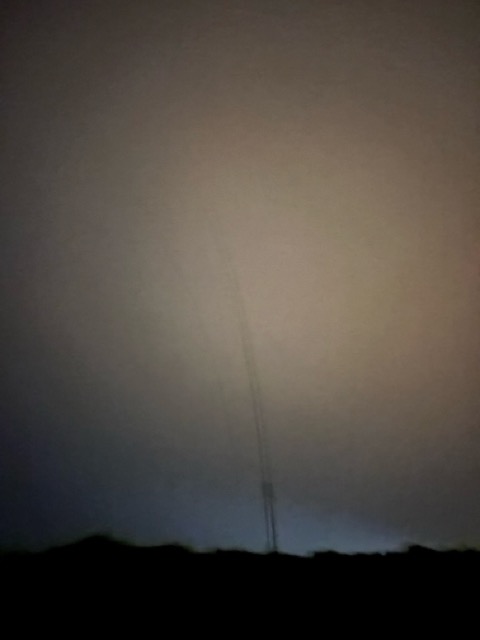
The SWR wasn’t that great, at 1:2 being the best we could get, so I had to reduce the power output of the radio. The weather was really challenging, despite the shelter of the crater, it was still very cold. Within a few minutes my fingers were completely numb! After one QSO in 10 minutes, we decided to pack up and retry in another location with better weather later in the week. The picture below shows the antenna being bent in the wind, lit up by the beam from the lighthouse! In retrospect it was not a good idea to try and set up in such windy weather!
For the third POTA attempt, we decided to set up on the beach. During the previous activation attempts, we had noticed that in the bomb crater the grass was quite springy and the ground lines were elevated. Perhaps the springy grass meant that our capacitance to ground was quite poor? Or, as we were in a crater, the ground lines went up away from the antenna – maybe this had caused the impedance of the antenna to change? The hope was that by changing locations we could get better ground connection on the beach, as the ground cables could lie directly on the ground, and we could easily push the spike all the way in. If nothing else, the views were spectacular!
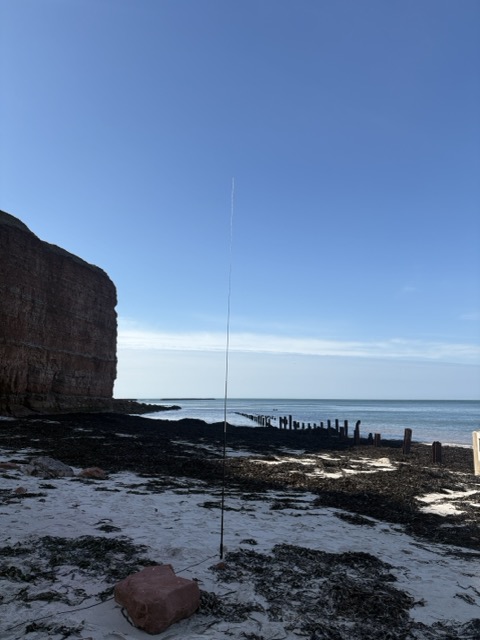
After 34 minutes I got to the 10 QSO’s required for the activation, and was able to call it a success! Afterwards I realised that this was the first POTA activation I had done with my new full German callsign: DB2SQL. That made the activation extra satisfying!
Whilst doing the POTA, we met a couple of radio amateurs who were part of a group of around 20 people that had come to activate Helgoland for IOTA under the callsign DA0HEL (https://www.qrz.com/db/DA0HEL). They do this every two years and had brought an impressive array of antennas with them (they also had to interrupt their activation for the gale force winds earlier in the week). The station will be active on SSB, CW and all digital modes until the 3rd April, so if you want to activate them, there is still some time to do so (more information in German here: https://www.funkamateur.de/nachrichtendetails/items/da0hel-und-dl0ih-qrv-vom-23-maerz-bis-3-april-2026.html).